
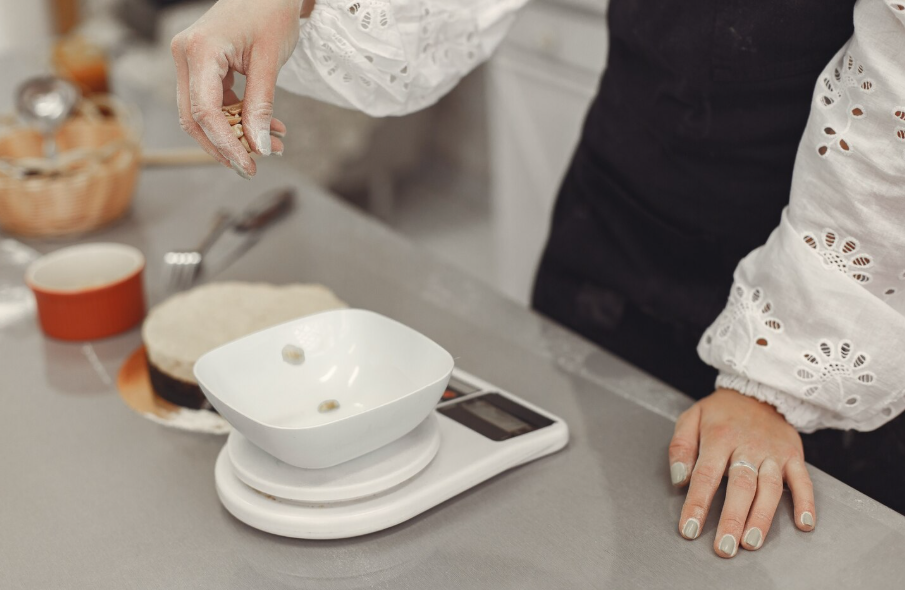
If your laboratory uses weighing equipment as part of its testing or calibration work, you have almost certainly come across the term metrological traceability. Under ISO 17025, the international standard for laboratory competence, traceability is not just a technical concept. It is a fundamental requirement that affects every measurement your laboratory produces and reports.
Yet for many laboratory managers and technicians, the relationship between weighing equipment, scale calibration, and metrological traceability can feel complicated. What does traceability actually mean for a floor scale or a counting scale? How does industrial scale calibration fit into the ISO 17025 framework? And what happens when equipment needs repair or replacement?
This guide answers those questions in plain language, with practical guidance that laboratories of all sizes can apply directly to their quality management systems.
What Is Metrological Traceability and Why Does It Matter?
Metrological traceability means a measurement result can be linked through a documented chain of calibrations, including industrial scale calibration, to a national or international standard, with measurement uncertainty stated at every step.
In simple terms, it proves where a measurement comes from. For example, a laboratory scale must be calibrated against certified reference standards that connect back to a national measurement institute.
Why ISO 17025 Requires Traceability
ISO 17025 clause 6.5 makes metrological traceability a mandatory requirement for all accredited laboratories. The standard requires that:
- All measurement results must be traceable to the International System of Units (SI)
- Calibration certificates must include uncertainty statements
- Reference standards and measuring equipment must have current, documented calibration
- Traceability must be maintained through accredited calibration providers or national measurement institutes
Without traceability, measurement results cannot be compared reliably between laboratories, customers cannot trust the data in test reports, and the laboratory risks losing its accreditation status entirely.
The Role of Weighing Equipment in Laboratory Traceability
Weighing equipment is one of the most commonly used measuring instruments in laboratories worldwide. From analytical balances measuring milligrams to industrial floor scales handling tonnes, the accuracy of these instruments directly affects the traceability of countless measurement results.
Types of Weighing Equipment Used in Accredited Laboratories
Laboratories use a wide range of weighing instruments depending on their testing or calibration scope. Common types include:
- Analytical and precision balances: Used for high-accuracy mass measurements in chemical, pharmaceutical, and research laboratories
- Industrial floor scales: Used in manufacturing, logistics, and heavy industry for large-mass measurements. The best industrial floor scales combine robust construction with high accuracy and are available as industrial floor scales for sale from specialist suppliers
- Industrial floor weighing scales: Designed for use in demanding environments where equipment is exposed to dust, moisture, or heavy mechanical loads
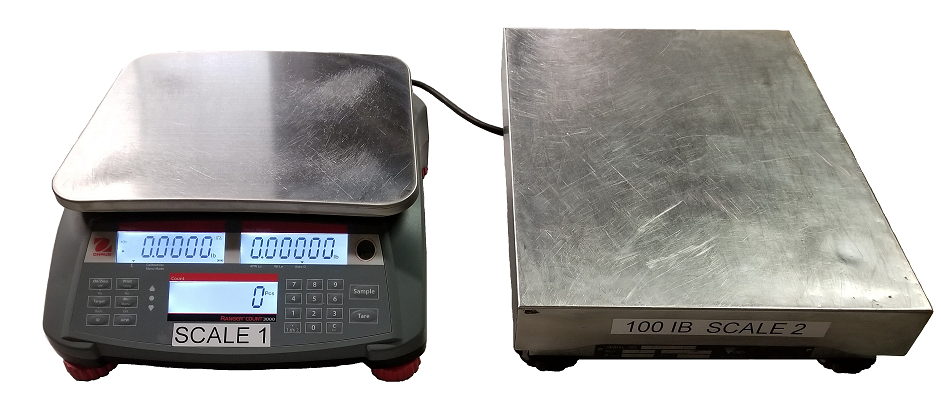
- Industrial counting scales: Used to count components by weight, popular in manufacturing and warehousing. The best counting scales offer high resolution and fast response times. Counting scales for sale range from compact bench models to heavy-duty industrial counting scale platforms
- Platform and bench scales: Used across a wide variety of laboratory and light industrial applications
Each of these instrument types must be calibrated and maintained in accordance with ISO 17025 requirements to support traceable measurement results.
Understanding the Traceability Chain for Weighing Equipment
The traceability chain begins with international mass standards, followed by national measurement institutes and accredited scale calibration companies. Laboratories then use certified reference weights to verify balances, floor scales, and counting scales.
Each step includes documented measurement uncertainty, which supports ISO 17025 compliance. This is why accredited weighing scale calibration services are important for accurate and traceable measurements.
| Traceability Level | Description | Example |
|---|---|---|
| Level 1 | International standard | SI kilogram held by BIPM |
| Level 2 | National measurement institute | National physical laboratory |
| Level 3 | Accredited calibration laboratory | ISO 17025 scale calibration companies |
| Level 4 | Working reference standards | Calibrated weights used on-site |
| Level 5 | Laboratory measuring instrument | Floor scale or counting scale in daily use |
Scale Calibration: The Foundation of Traceable Weighing
Scale calibration is the process of comparing a weighing instrument against a traceable reference standard and documenting any deviation between the two. It establishes the scale’s accuracy at the time of calibration and provides the uncertainty contribution for your measurement budget.
What Good Scale Calibration Services Include
When selecting scale calibration services or industrial scale calibration providers, laboratories should look for the following:
- Accreditation to ISO 17025 by a recognised accreditation body
- Calibration certificates that state the expanded uncertainty at a defined confidence level
- Reference weights with current calibration documentation traceable to national standards
- Clear documentation of the calibration method used
- Defined calibration intervals based on equipment type and usage
- Coverage of the full measurement range relevant to the laboratory’s work
Industrial scale calibration requirements may differ from those for precision laboratory balances. Industrial floor weighing scales and industrial floor scales operate in harsher environments and often need more frequent checks alongside more detailed uncertainty evaluations.
Scale Repair and Its Impact on Traceability
Calibration establishes traceability, but it is only valid as long as the equipment continues to perform within its specified characteristics. When equipment is damaged, drifts out of tolerance, or develops a fault, the traceability of its measurements is effectively broken until repair and recalibration are completed.
When to Arrange a Scale Repair Service
Laboratories should arrange a scale repair service promptly whenever any of the following occur:
- The scale produces readings that are inconsistent, unstable, or erratic
- The scale fails an in-house check standard verification test
- Physical damage is visible on the platform, load cell housing, or display unit
- The scale does not return to zero correctly after removing a load
- Environmental exposure such as moisture or chemical contact is suspected to have affected internal components
Floor scale repair and industrial scale repair require specialist tools and expertise. A qualified industrial scale repair company can ensure repairs are completed correctly and followed by proper calibration to maintain traceability. Incorrect repairs may introduce measurement errors and affect calibration validity.
Industrial Floor Scales: Special Considerations Under ISO 17025
Industrial floor scales operate under heavy loads and harsh conditions, which can affect accuracy more quickly than laboratory balances. Even the best industrial floor scales require regular maintenance and calibration to maintain traceable and reliable measurements.
Key considerations for industrial floor scale management include:
- Placing scales on stable, level surfaces to avoid platform flex affecting accuracy
- Keeping scales clean and free from debris that can rest on the platform and affect zero readings
- Inspecting load cell cables and connectors regularly for signs of wear or corrosion
- Verifying performance with check weights at the start of each working shift for critical measurements
- Scheduling floor scale repair promptly when performance checks reveal drift or instability
Industrial Scale Rental: Maintaining Traceability with Rented Equipment
Industrial scale rental and weighing scale for rent options can support short-term projects or equipment breakdowns. However, ISO 17025 laboratories are still responsible for ensuring rented equipment meets all measurement and traceability requirements. Before using a rented scale, laboratories should confirm the following:
- The rented equipment comes with a current calibration certificate issued by an accredited provider
- The certificate includes expanded uncertainty at a stated confidence level
- The measurement range and accuracy class of the rented scale are suitable for the intended measurements
- Environmental requirements such as temperature and humidity are met in the area where the scale will be used
- The rental provider can supply full traceability documentation if requested during an audit
When renting industrial floor weighing scales or industrial counting scales for accredited work, treating the rental equipment with the same rigour as owned equipment is essential for maintaining ISO 17025 compliance throughout the rental period.
If you need assistance or have any questions, feel free to visit our local office for professional guidance.
Frequently Asked Questions
1. What is metrological traceability in ISO 17025?
Metrological traceability links a measurement result to national or international standards through documented calibrations with stated uncertainty. ISO 17025 requires laboratories to maintain traceability for all measuring equipment.
2. Why is scale calibration important for ISO 17025 compliance?
Scale calibration connects weighing equipment to recognised measurement standards and confirms accuracy. It also provides uncertainty data needed for traceable and compliant measurements.
3. What should a calibration certificate include?
A calibration certificate should include the calibration date, measurement results, uncertainty values, reference standards used, and the accreditation details of the calibration provider.
4. When does weighing scale repair affect traceability?
Any weighing scale repair involving internal parts or electronics can affect calibration status. Recalibration is required after industrial scale repair or floor scale repair to restore traceability.
5. Can rented industrial scales be used in ISO 17025 work?
Yes, if the rented scale has a valid calibration certificate, documented uncertainty data, and meets the required measurement conditions.
6. What is the difference between industrial and laboratory scale calibration?
Both follow ISO 17025 traceability requirements, but industrial scale calibration usually involves larger capacities and harsher operating conditions than laboratory balances.
Final Thoughts
Metrological traceability ensures that every weighing measurement in an ISO 17025 accredited laboratory can be linked back to recognised national or international standards through documented calibration. It supports measurement accuracy, regulatory compliance, and confidence in laboratory results.
Maintaining traceability involves regular scale calibration, proper equipment maintenance, timely industrial scale repair, and complete calibration records. Whether a laboratory uses analytical balances, industrial floor weighing scales, or counting scales, consistent calibration and verification are essential for reliable performance.
For more information about weighing scale calibration services, industrial scale calibration, or scale repair support, contact us today to ensure your equipment remains accurate, compliant, and fully traceable for critical laboratory applications.