
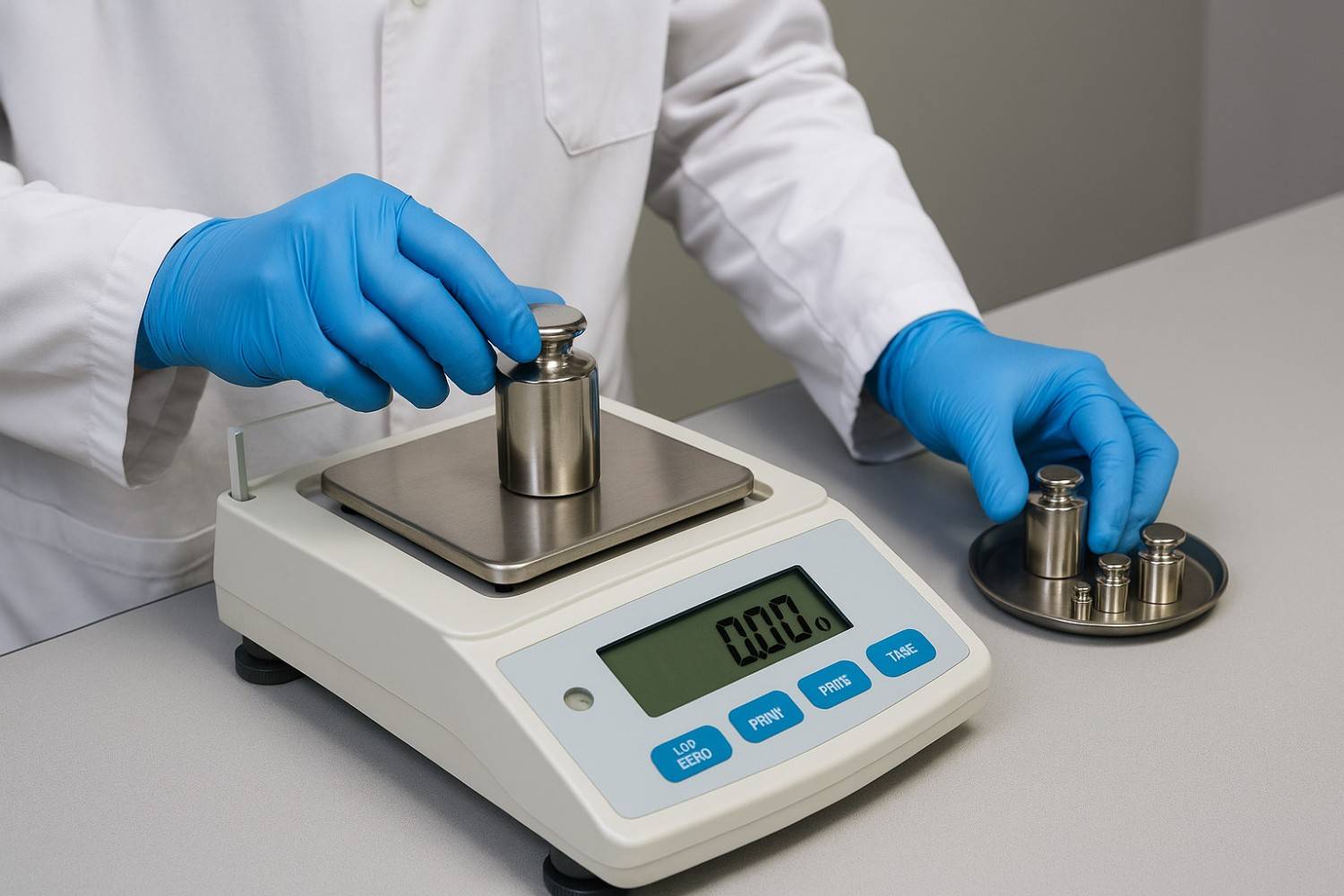
Municipal and city laboratories have a critical responsibility in ensuring safe drinking water, with every test contributing to compliance with EPA standards and the Clean Water Act. Certified lab balances play a key role in delivering accurate measurements for water quality analysis.
This post explores their importance, compliance requirements, and why proper calibration and maintenance are essential for both scientific accuracy and regulatory adherence.
What the EPA and Clean Water Act Require from Water Testing Laboratories
The Clean Water Act provides the legal framework for water quality regulation in the United States, with the EPA setting strict methods for testing contaminants, pollutants, and by products.
These methods also define equipment standards, requiring certified balances with precise accuracy and regular scale calibration services for processes like gravimetric analysis and solution preparation to ensure reliable and compliant results.
Key compliance requirements relevant to laboratory balances include:
- Traceable calibration to national or international measurement standards
- Documented performance verification at defined intervals
- Uncertainty budgets that demonstrate the balance contributes acceptable measurement error to the overall analytical result
- Accreditation alignment, with many state and municipal labs required to hold or work toward ISO 17025 accreditation
Non-compliance can have serious consequences, as results from uncalibrated equipment may be rejected by regulators. This can invalidate entire test batches and lead to repeat testing, audits, or even enforcement action.
Why Laboratory Balance Accuracy Matters in Water Analysis
It is worth understanding concretely why balance accuracy has such a significant impact on water quality results, and how accredited lab scale calibration plays a key role in maintaining that accuracy. The connection is not always immediately obvious to people outside the laboratory setting.
Reagent and Standard Preparation
Water quality testing relies on accurately weighing chemicals to prepare solutions with precise concentrations. If the balance is inaccurate, it leads to wrong concentrations, poor calibration, and unreliable results.
In practical terms, this means:
- A balance reading 0.5 mg high on a 100 mg weighing introduces a 0.5% concentration error into every standard prepared from that weighing
- That error propagates through every result calculated against those standards
- Results that appear to show compliance may actually reflect instrument mis calibration rather than true water quality
- Results that appear to show contamination may similarly be artefacts of balance inaccuracy rather than genuine findings
Gravimetric Analysis Methods
Several EPA-approved water testing methods rely directly on gravimetric measurement, where the result of the test is derived from weighing a sample or residue. Examples include:
- Total suspended solids determination by filtration and weighing of the dried filter
- Total dissolved solids determination by evaporation and weighing of the residue
- Settleable solids measurement using weight-based calculations
- Residue on ignition tests for certain inorganic contaminants
In these methods, the balance reading is the result itself, not just an input. Any inaccuracy directly affects the final test result and cannot be corrected later in the analytical process.
If you need assistance with certified lab balances or calibration services, feel free to visit our local office for professional support.
Types of Lab Balances Used in Water Quality Testing
Municipal water quality laboratories use several categories of balance depending on the application. Each has different accuracy specifications and calibration requirements.
Analytical Balances
Analytical balances are the workhorses of water quality laboratories. They typically offer readability to 0.1 mg or 0.01 mg and are used for:
- Weighing reagents and primary standards for solution preparation
- Gravimetric determinations requiring high precision
- Preparation of calibration check standards
- Weighing filter papers before and after total suspended solids analysis
Analytical balance calibration is a critical maintenance task in water testing laboratories. These instruments are highly sensitive to temperature, vibration, and air currents, and can drift between scheduled calibrations.
Precision Balances
Precision balances offer readability typically from 0.001 g to 0.01 g and are used for applications where analytical balance sensitivity is not required but standard top-pan accuracy is insufficient. In water quality laboratories, precision balances are commonly used for:
- Weighing larger quantities of reagents for bulk solution preparation
- Sample preparation steps where high precision is needed but microgram sensitivity is not
- Verification of volumetric equipment by gravimetric methods
Precision laboratory scale repair is an important service for laboratories that rely on these instruments in daily workflows. A precision balance showing drift or inconsistency should be removed from service and assessed by a qualified technician before results produced on it are accepted.
The Role of ISO 17025 Accreditation in Water Quality Labs
ISO 17025 is the international standard for the competence of testing and calibration laboratories. For water quality laboratories, achieving or maintaining ISO 17025 accreditation is increasingly a regulatory expectation rather than simply a mark of quality.
What ISO 17025 Requires for Weighing Equipment
Under ISO 17025, laboratories must:
- Identify all equipment that has a significant effect on the validity of results
- Establish calibration programmes for that equipment with defined intervals
- Use calibration services that are themselves accredited or traceable to recognised standards
- Maintain records of calibration, including uncertainty values
- Establish procedures for dealing with equipment found to be out of specification
For laboratory balances, ISO 17025 lab scale calibration must be carried out by an accredited provider issuing certificates with measurement uncertainty statements. Working with accredited providers ensures ISO 17025 compliance and audit-ready records.
Regional Calibration Access for Municipal Laboratories
Municipal laboratories across Wisconsin and Illinois have access to ISO 17025 accredited calibration services from regional providers. On-site calibration is preferred for sensitive lab balances to avoid transport-related disturbances to instrument alignment.
Available regional services include:
- ISO 17025 scale calibration in Wisconsin for municipal labs across the state
- ISO 17025 scale calibration in Madison for facilities in the Madison area
- ISO 17025 calibration in Milwaukee for laboratories in the Milwaukee metro region
- ISO 17025 calibration Illinois for facilities throughout the state
- ISO 17025 calibration Chicago for urban municipal and research laboratories
Choosing scale calibration companies with ISO 17025 accreditation and experience in laboratory environments ensures that calibration is carried out to the standard required by water quality compliance programmes.
Building a Calibration and Maintenance Programme for Water Lab Balances
A structured approach to balance calibration and maintenance reduces the risk of compliance failures and extends the working life of the equipment.
Daily and Weekly Verification
- Perform zero balance check at the start of each working day
- Verify with a single certified reference weight within the working range
- Record the result in the laboratory’s equipment log
- Remove the balance from service if the verification result falls outside the acceptance criteria
Scheduled Calibration
- Arrange formal calibration at intervals defined by the laboratory’s quality management system, typically every six to twelve months
- Use a provider offering laboratory scale calibration services with ISO 17025 accreditation
- Ensure the calibration certificate includes uncertainty values and is signed by a qualified technician
- File the certificate with the equipment record and flag the next due date
Maintenance and Repair
- Keep the balance pan and surrounding area clean and free from chemical contamination
- Check the levelling bubble regularly and re-level as needed
- Inspect the draft shield for damage that could affect air current protection
- Arrange precision laboratory scale repair promptly when any mechanical or electronic fault is identified
- Do not continue using a balance that fails daily verification until it has been assessed and recalibrated
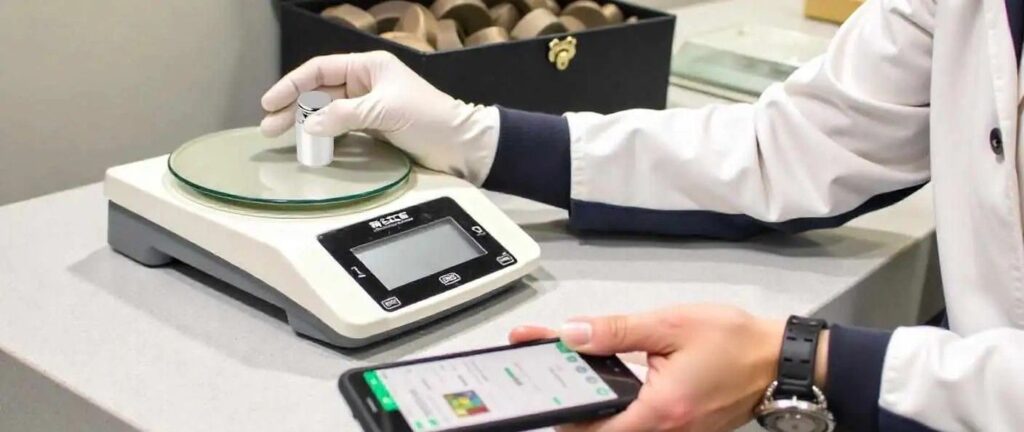
Lab Balance Types at a Glance
| Balance Type | Readability | Key Use |
|---|---|---|
| Analytical balance | 0.1 mg to 0.01 mg | Standard preparation, gravimetric analysis |
| Precision balance | 0.001 g to 0.01 g | Bulk reagent weighing, sample prep |
| Semi-microbalance | 0.01 mg | Trace contaminant analysis |
| Microbalance | 0.001 mg | Ultra-trace and specialised analysis |
| Top-pan balance | 0.1 g | General purpose, non-critical weighing |
Conclusion
Accurate and well-maintained laboratory balances are essential for reliable water quality testing and compliance with EPA and Clean Water Act standards. From reagent preparation to gravimetric analysis, every measurement depends on precision, traceability, and regular calibration. A structured maintenance and ISO 17025 accredited calibration programme helps laboratories ensure accuracy, confidence in results, and avoid compliance issues.
For expert guidance on certified lab balances, ISO 17025 lab scale calibration, or maintenance and repair services, please contact us today for professional support.
Frequently Asked Questions
What is ISO 17025 lab scale calibration and how does it differ from standard calibration?
ISO 17025 lab scale calibration is performed by an accredited provider and includes measurement uncertainty and full traceability. Standard calibration may not meet these regulatory and accreditation requirements.
How often should analytical balances be calibrated in a water quality laboratory?
Analytical balances are typically calibrated every 6–12 months, with more frequent checks for critical use. Daily verification with certified weights is also standard practice.
What happens if a laboratory balance fails calibration?
The balance should be taken out of service immediately, and affected results reviewed. After repair and recalibration, it can only be used again with a valid certificate.
What should a municipal lab look for in a laboratory scale calibration service provider?
They should choose an ISO 17025 accredited provider with experience in laboratory environments and the ability to perform on-site calibration for sensitive instruments.
Can the same calibration provider service both laboratory balances and industrial floor scales?
Yes, many providers handle both laboratory and industrial equipment, making calibration, documentation, and maintenance easier to manage.