
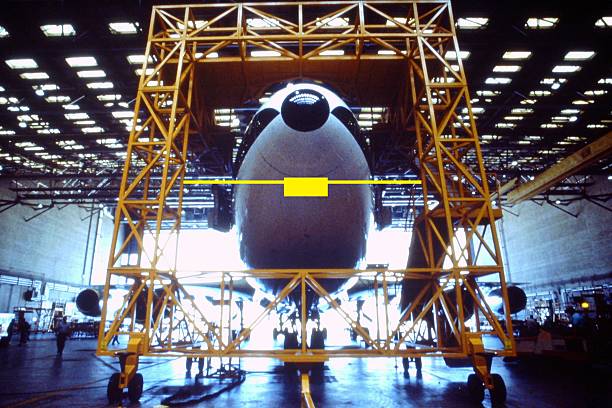
When most people think about cargo planes, they picture large aircraft carrying everything from freight and machinery to time-sensitive shipments across long distances. But behind every successful cargo flight is a process that has to be handled with precision: knowing how much the aircraft weighs and where that weight is located.
For cargo operators, accurate weighing is not simply about determining the total weight of a shipment. The distribution of that weight can affect an aircraft’s center of gravity, performance, fuel requirements, and overall operating safety.
That is why reliable weighing equipment and proper weight distribution are such important parts of cargo aircraft operations.
The Federal Aviation Administration (FAA) emphasizes that aircraft must be operated within their approved weight and balance limitations. Its guidance also explains that simply staying below the aircraft’s maximum weight is not enough—the load must be distributed so the center of gravity remains within the approved limits.
For reliable measurements and better confidence in your cargo weighing process, professional weighing scale calibration services can help ensure your aviation scales continue to deliver accurate and dependable results.
Why Is Weight So Important for Cargo Planes?
Every aircraft has specific limits for how much weight it can safely carry. These limits are established based on the aircraft’s design, structure, performance characteristics, and operating requirements.
For a cargo plane, the total operating weight can include:
- The aircraft itself
- Fuel
- Crew
- Cargo
- Cargo containers or pallets
- Other required equipment
Adding cargo increases the aircraft’s overall weight, but the location of that cargo matters just as much.
An aircraft that is within its maximum gross weight can still have a weight-and-balance problem if the cargo is positioned incorrectly.
Weight Affects Aircraft Performance
As aircraft weight increases, performance can change. According to FAA guidance, excessive aircraft weight can contribute to a higher takeoff speed, longer takeoff distance, reduced climb performance, reduced cruising performance, and longer landing distances.
For cargo operators, this makes accurate weight information particularly important during flight planning.
Knowing the actual weight of the cargo helps operators make informed decisions about loading, fuel, and aircraft performance rather than relying on estimates.
What Does Weight Distribution Mean?
Weight distribution refers to where the cargo and other loads are positioned inside the aircraft.
Imagine placing a heavy box in the middle of a balance board. Then imagine moving that same box toward one end. The total weight has not changed, but the way the board balances has.
Aircraft work according to the same basic principle.
The location of cargo affects the aircraft’s center of gravity (CG). The center of gravity needs to remain within the limits specified for the aircraft.
The FAA identifies improperly loaded cargo and cargo shifts as hazards because they can cause an aircraft to move outside its approved weight or center-of-gravity limits.
Why Center of Gravity Matters
The center of gravity is essentially the point around which the aircraft balances.
If cargo is concentrated too far forward or too far aft, it can change the aircraft’s balance and handling characteristics.
An aircraft with an improperly positioned load may experience changes in:
- Pitch control
- Stability
- Takeoff performance
- Climb performance
- Landing characteristics
- Overall handling
This is why cargo loading procedures are designed around more than simply filling available space.
Why Accurate Cargo Weighing Matters
Before cargo can be properly distributed, its weight needs to be known.
That sounds straightforward, but inaccurate weight measurements can create problems further down the loading process.
For example, if a shipment is assumed to weigh less than it actually does, the difference affects the aircraft’s total weight calculation. When multiple shipments are involved, small discrepancies can accumulate.
Accurate scales provide the reliable measurement information needed for cargo planning and weight-and-balance calculations.
Estimates Are Not a Substitute for Accurate Weighing
Cargo can vary considerably in size, density, packaging, and configuration. Two shipments that occupy similar amounts of space may have very different weights.
Using an estimate when an accurate measurement is available can introduce unnecessary uncertainty into the loading process.
For operations where weight accuracy matters, properly maintained and calibrated weighing equipment provides a stronger foundation for decision-making.
The Role of Aviation Scales in Cargo Operations
Cargo operations require weighing equipment that is suited to the application.
Industrial Scale Inc.’s Aviation Scales are designed for aviation-related weighing applications and can be an important part of a dependable weighing process.
The appropriate scale depends on factors such as:
- The type and size of cargo being weighed
- Required weighing capacity
- Required resolution
- Operating environment
- How frequently the scale is used
- Applicable accuracy and documentation requirements
The goal is not simply to use a scale that can handle the weight. The weighing system should be appropriate for the specific application and maintained so that its measurements remain dependable.
Why Scale Calibration Matters in Aviation Weighing
Even a high-quality scale can become inaccurate over time.
Regular use, mechanical wear, environmental conditions, impacts, and other factors can affect weighing equipment. If a scale gradually develops an error, that error may not always be obvious to the person using it.
This is where industrial scale calibration becomes important.
Scale Calibration Services help businesses verify the performance of their weighing equipment and maintain reliable measurement records.
Industrial Scale Inc. states that its calibration services are ISO/IEC 17025 accredited and NIST-traceable, with documentation provided for calibration work.
Calibration Helps Support Reliable Measurements
Calibration compares a scale’s performance against known reference standards to determine whether it is providing measurements within the required tolerance.
For cargo weighing applications, this matters because the measurement taken at the scale can become an input into the broader aircraft weight-and-balance process.
If the initial measurement is inaccurate, calculations based on that measurement can also be affected.
That is why scale maintenance and calibration should be viewed as part of a larger measurement-control process—not simply as an occasional equipment check.
What Can Happen When Cargo Is Improperly Distributed?
Cargo loading is a coordinated process because weight needs to be distributed according to the aircraft’s approved loading limitations.
The FAA specifically identifies mis-loaded cargo as a safety hazard. Cargo can shift or be positioned in a way that causes an aircraft to exceed its weight or center-of-gravity limits, potentially affecting aircraft control.
Cargo Shifts Can Change the Aircraft’s Balance
Cargo doesn’t only need to be placed correctly before takeoff. It also needs to remain secure during flight.
If cargo moves from its intended position, the aircraft’s weight distribution can change.
For this reason, cargo loading involves both accurate weighing and proper securing.
The FAA notes that aircraft manuals and approved loading procedures establish where, how, and what cargo can be loaded. Operators must follow the applicable aircraft limitations and procedures.
Accurate Weighing Can Also Support Better Operational Planning
The benefits of accurate weighing extend beyond safety considerations.
Reliable cargo weight information can help operators make better decisions about:
- Aircraft loading
- Fuel planning
- Available payload
- Shipment documentation
- Weight-and-balance calculations
- Operational efficiency
The FAA’s Weight & Balance Handbook explains that aircraft weighing, accurate weight-and-balance records, and proper loading are interconnected parts of an effective weight-and-balance system.
When these elements work together, operators have better information available when preparing an aircraft for flight.
How Often Should Aviation Scales Be Calibrated?
There is no single calibration interval that applies to every aviation weighing application.
The appropriate schedule can depend on factors such as:
- How frequently the scale is used
- The operating environment
- The type of scale
- Required measurement accuracy
- Manufacturer recommendations
- Internal quality procedures
- Regulatory or contractual requirements
- The consequences of an inaccurate measurement
A scale that is used frequently in a demanding environment may require more frequent attention than equipment that is used occasionally under controlled conditions.
Instead of choosing an arbitrary interval, businesses should consider their specific application and establish a calibration and maintenance program appropriate for their equipment and quality requirements.
Choosing the Right Weighing Equipment for Cargo Operations
Selecting an aviation scale should involve more than looking at its maximum capacity.
Before choosing equipment, consider:
1. Weighing Capacity
The scale should comfortably accommodate the loads being measured without routinely operating at its limits.
2. Resolution and Accuracy
The required resolution should match the application’s measurement needs. A higher-capacity scale is not automatically the right choice if the application requires greater measurement precision.
3. Operating Environment
Airport and aviation environments can involve demanding operating conditions. The weighing equipment should be appropriate for where and how it will be used.
4. Service and Calibration Support
Equipment is only useful when it continues to provide dependable measurements. Consider the availability of calibration, maintenance, repair, and technical support when selecting a weighing solution.
A Reliable Weighing Process Starts With the Right Equipment
Cargo aircraft operations depend on accurate information. Before cargo is loaded, operators need to know what they are dealing with—including how much the cargo weighs and where that weight will be positioned.
A dependable weighing process combines suitable equipment, proper loading procedures, accurate records, and ongoing equipment maintenance.
Aviation scales can provide the measurement foundation, while regular calibration helps ensure that the information coming from those scales remains reliable.
For organizations involved in cargo, aviation, aerospace, or other demanding weighing applications, working with an experienced scale provider can help ensure the equipment and service program match the application.
Final Thoughts
Weight and balance are fundamental considerations in cargo aircraft operations. The total weight of an aircraft matters, but where that weight is distributed matters just as much.
Accurate cargo weighing helps provide dependable information for weight-and-balance calculations, while proper loading and securement help keep cargo in its intended position.
For that reason, aviation scales should be treated as an important part of the overall cargo-handling process—not simply another piece of equipment on the ground.
Maintaining those scales through appropriate inspection, maintenance, and industrial scale calibration can help organizations maintain measurement confidence and reliable records.
If your operation needs aviation weighing equipment, calibration, repair, or technical support, you can contact Industrial Scale Inc. to discuss your specific weighing requirements.
Frequently Asked Questions
Accurate weighing provides reliable information about cargo weight, which is an important input for aircraft weight-and-balance planning. Incorrect cargo weight can affect total aircraft weight calculations and the resulting loading decisions.
Being below the maximum weight does not automatically mean an aircraft is properly loaded. Cargo also needs to be distributed so that the aircraft’s center of gravity remains within its approved limits.
Aviation scales are used for weighing applications associated with aircraft and aviation operations. Depending on the equipment and application, they can help determine the weight of cargo or other items involved in aircraft operations.
Calibration helps verify that weighing equipment is performing accurately against known standards. Maintaining properly calibrated equipment helps provide more reliable weight measurements for operational and recordkeeping purposes.
The appropriate calibration frequency depends on the scale, its usage, operating environment, accuracy requirements, manufacturer recommendations, and applicable quality or regulatory requirements. A calibration program should be established according to the specific application.
A cargo shift can change the aircraft’s weight distribution and center of gravity. If the resulting condition falls outside approved limits, it can affect aircraft handling and control. This is why cargo must be loaded and secured according to the aircraft’s approved procedures.
No. Capacity is only one consideration. Resolution, accuracy, environmental conditions, scale configuration, application requirements, calibration support, and service availability should also be evaluated.