
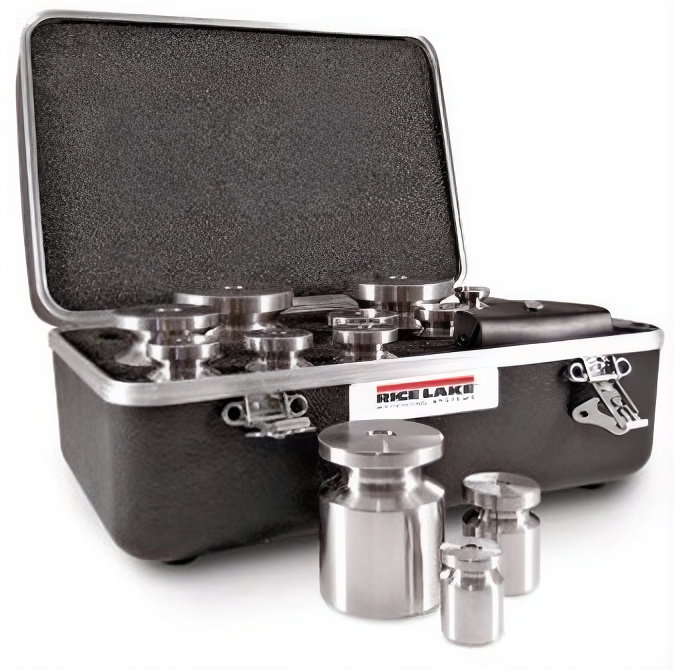
If you have ever watched a technician place small metal weights on a scale during a maintenance visit, you might have wondered what those weights actually are and why they matter. Those are certified weights, and they play a critical role in making sure your weighing equipment gives accurate, reliable readings.
Whether you are running a warehouse, a laboratory, a production floor, or a pharmacy, understanding certified weights helps you make smarter decisions about scale calibration services, scale repair services, and overall measurement quality.
What Are Certified Weights?
Certified weights are physical reference standards made to a specific level of accuracy. They are used primarily for scale calibration, which is the process of verifying and adjusting a scale so that it reads correctly. A certified weight comes with documentation, usually a certificate, that confirms it meets a defined tolerance standard.
Think of them like rulers for mass. Just as you would not measure a room with a bent or warped ruler, you would not calibrate an industrial floor scale with a weight that is not verified to be accurate.
Certified weights are essential for:
- Scale calibration services performed during routine maintenance
- Industrial scale calibration carried out after repairs or installations
- Weighing scale calibration services required by regulatory or industry standards
- Verifying performance of counting scales, floor scales, and other industrial equipment
The Two Main Standards: ASTM and OIML
When it comes to certified weights, two major international systems govern how they are made and classified.
ASTM International
ASTM stands for the American Society for Testing and Materials. ASTM weight classes are widely used in the United States and are organized from the most precise (Class 0) down to Class 7. Each class has a defined tolerance, meaning there is a maximum allowable difference between the weight’s actual mass and its stated value.
OIML (International Organization of Legal Metrology)
OIML is an international body that establishes metrological standards used across Europe and much of the rest of the world. OIML classes run from E1 (most precise) down to M3 (least precise). These are commonly referenced in global trade, pharmaceutical manufacturing, and scientific research.
Both systems serve the same purpose: ensuring that weights are accurate enough for their intended use. The difference mostly comes down to geography and industry preference.
ASTM Weight Classes and Their Tolerances
Here is a breakdown of ASTM weight classes and where each one is typically used:
| ASTM Class | Tolerance (1 kg example) | Common Applications |
|---|---|---|
| Class 0 | 0.5 mg | Primary reference standards, metrology labs |
| Class 1 | 1.6 mg | High-precision lab balances, calibration labs |
| Class 2 | 3.2 mg | Analytical balances, pharmaceutical labs |
| Class 3 | 10 mg | General laboratory use, quality control |
| Class 4 | 30 mg | Commercial scales, precision counting scales |
| Class 5 | 100 mg | General industrial use, educational settings |
| Class 6 | 500 mg | Industrial floor scale calibration, rough checks |
| Class 7 | 1500 mg | Heavy-duty industrial applications, field use |
As the class number increases, the tolerance gets wider, meaning the weight does not need to be as precise. Lower-numbered classes are reserved for applications where even a tiny error is unacceptable, such as pharmaceutical manufacturing or scientific research.
OIML Weight Classes at a Glance
The OIML system follows a similar structure:
- E1 and E2 – Used in national metrology institutes and primary calibration laboratories. These are the most accurate weights available and are rarely handled outside of controlled environments.
- F1 and F2 – Used for calibrating high-precision balances in pharmaceutical, jewelry, and laboratory settings. Scale calibration companies often stock these for sensitive industrial applications.
- M1, M2, and M3 – Used for commercial trade, general industrial weighing, and applications like verifying industrial floor scales. These are the most commonly encountered weights in everyday industrial settings.
Why Weight Class Selection Matters
Choosing the wrong weight class for calibration is a common and costly mistake. Here is why it matters:
- If you use a lower-precision weight to calibrate a high-precision balance, your calibration is essentially meaningless.
- If you use an overly precise weight for a rough industrial floor weighing scale, you are spending money on accuracy you do not need.
- Regulatory requirements in industries like food processing, pharmaceuticals, and legal-for-trade weighing often specify a minimum weight class.
A qualified industrial scale repair company or scale calibration service provider will always know which weight class is appropriate for your specific equipment and industry.
How Certified Weights Connect to Scale Calibration
Scale calibration is not just about placing a weight on a scale and checking if the number matches. It is a systematic process that involves:
- Inspecting the scale for visible damage or wear
- Placing certified weights across the scale’s range (low, mid, and full capacity)
- Recording the displayed values and comparing them to the known values
- Adjusting the scale’s internal settings if readings fall outside acceptable tolerances
- Documenting everything with a calibration certificate
This process is central to both industrial scale calibration and weighing scale calibration services. Without traceable, certified weights, none of these steps carry any real credibility.
Whether you are working with best counting scales used for inventory management or best industrial floor scales handling pallets of goods, calibration keeps your operations legally compliant and financially accurate.
Who Needs Regular Calibration and What Equipment It Covers
Scale calibration services are not just for laboratories. A wide range of industries and equipment types depend on regular calibration using certified weights.
Equipment that regularly requires calibration:
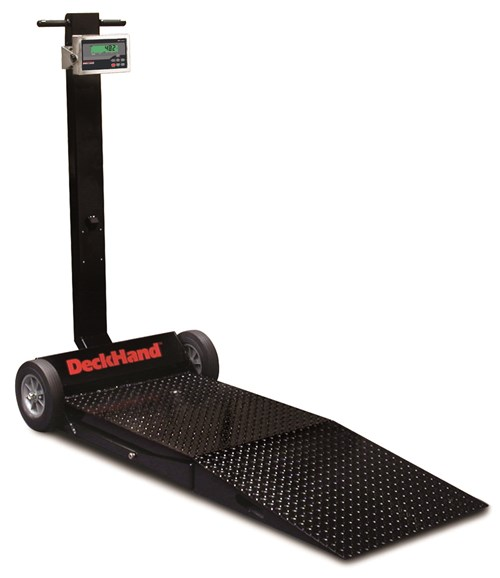
- Industrial floor scales used in logistics, warehouses, and manufacturing
- Counting scales used in parts management and inventory
- Platform scales in food production and processing
- Truck scales and axle weighers in transportation
- Precision bench scales in pharmaceutical settings
Industries that depend on calibration:
- Food and beverage processing
- Pharmaceuticals and healthcare
- Mining and aggregates
- Logistics and freight
- Retail and commercial trade
If your business relies on these scales, regular calibration is essential for accuracy and compliance. After any floor scale repair, calibration ensures correct readings.
For reliable service providers and customer reviews, you can also visit our office to learn more about our services and speak with our team directly.
Scale Repair and Calibration: How They Work Together
Many businesses don’t realize that scale repair and calibration are different but closely related.
Scale repair fixes physical or electronic issues like damaged parts, faulty load cells, or display errors, restoring the scale to working condition.
Scale calibration follows repair and ensures the scale is accurate and within tolerance.
Working with a provider that offers both services saves time and ensures reliable results in one visit.
If buying equipment isn’t feasible, industrial scale rental options provide calibrated equipment without a large upfront cost, as reputable providers ensure accuracy before delivery.
Frequently Asked Questions
What is the difference between ASTM and OIML weights?
ASTM is a U.S.-based standard, while OIML is used internationally. Both define weight classes and tolerances, but ASTM uses numbered classes (0–7) and OIML uses letter-based classes (E1–M3).
How often should scales be calibrated?
Calibration depends on usage and industry requirements. High-use scales may need monthly or quarterly calibration, while low-use scales are typically calibrated annually.
Can I calibrate my own scale without professional help?
Basic checks can be done in-house using certified weights. However, official calibration usually requires a qualified technician and traceable standards.
What happens if a scale fails calibration?
The scale is taken out of service and adjusted. If it still doesn’t meet tolerance, repair is required before recalibration.
What are industrial floor scales typically used for?
They are used to weigh heavy items like pallets, drums, and equipment in warehouses, manufacturing, and shipping environments.
What is the purpose of counting scales?
Counting scales determine the number of items by dividing total weight by the weight of one piece. They are commonly used in inventory and manufacturing.
Conclusion
Certified weights ensure accurate and reliable measurements. Understanding ASTM and OIML standards, along with weight classes and tolerances, helps you choose the right calibration approach. Regular calibration and proper maintenance keep scales accurate, compliant, and efficient in any operation. Contact us today for reliable and professional scale calibration services.