
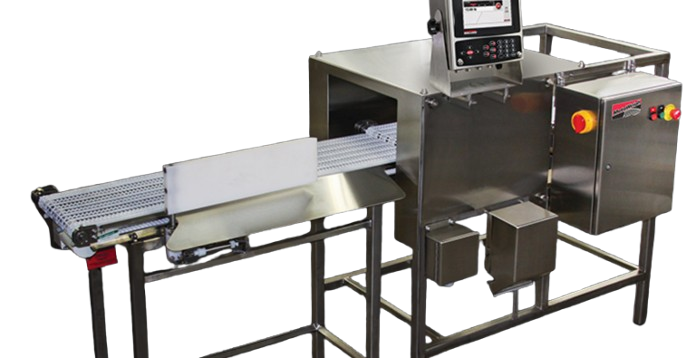
When products move through production lines at a rate of hundreds of items per minute, maintaining accurate weight measurements becomes a significant challenge. Dynamic weighing systems solve this problem by allowing manufacturers to check weights without slowing production.
For businesses, pairing these systems with professional-scale repair services, industrial-scale repair, and regular scale calibration ensures accuracy, reduces downtime, and keeps production compliant with regulations.
What Are Dynamic Weighing Systems?
Dynamic weighing systems are designed to measure the weight of products while they remain in motion. Unlike traditional static scales, which require products to stop for weighing, dynamic systems capture accurate data as items move past on conveyor belts.
At the core is the in-line checkweigher, which monitors every product and sorts items automatically based on predetermined weight specifications. Modern checkweighers can process anywhere from 60 to over 600 products per minute while maintaining precision within fractions of a gram. This is especially useful for facilities using Tufner platform & floor scales, Ohaus platform & floor scales, and other industrial weighing platforms.
How In-Line Checkweighers Operate: Step-by-Step
Dynamic checkweighers operate in three main stages: product infeed and preparation, weight measurement, and product sorting.
Step 1: Product Infeed and Preparation
Products first enter the system via an infeed conveyor. This stage ensures that the product is properly positioned for accurate weighing.
- Speed Synchronization – The conveyor adjusts the speed of incoming products to create a consistent flow. This helps avoid errors in weighing scale readings and reduces the need for frequent floor scale repair.
- Product Spacing – Indexing mechanisms ensure products are properly separated, so one item doesn’t interfere with the next. Proper spacing reduces measurement errors and minimizes unnecessary industrial scale repair services.
- Orientation Control – The system aligns products correctly on the weigh belt. Misaligned items can lead to inaccurate weights or frequent recalibration needs. This is crucial for industrial floor weighing scales and best counting scales.
Step 2: Weight Measurement on the Weigh Belt
The actual weighing occurs as the product passes over the load cell.
- Load Cell Activation – The product’s weight applies a force detected by the load cell, which converts it into an electrical signal. This is fundamental for industrial-scale calibration and ensures reliable readings.
- Signal Processing – Electronics filter out vibrations and noise from the conveyor or nearby machinery, improving accuracy. Facilities using industrial counting scales or bench scale platforms benefit from this technology.
- Data Recording – Multiple readings are captured during the brief transit on the belt. Averaging these readings ensures precise results for documentation and process optimization, which is key for scale calibration services in Illinois.
Step 3: Product Sorting and Rejection
After weighing, the system decides whether products meet weight requirements.
- Weight Classification – Each product is classified as underweight, acceptable, or overweight, based on preset limits.
- Automatic Rejection – Items outside tolerance are removed by pushers, air jets, or diverters. This keeps production lines efficient without human intervention.
- Data Logging – Weight information is recorded for compliance, quality control, and troubleshooting, reducing downtime and reliance on emergency industrial scale repair.
Load Cell Technologies: Strain Gauge vs EMFR
The heart of any dynamic checkweigher is its load cell. Two main technologies are commonly used: strain gauge load cells and Electromagnetic Force Restoration (EMFR) load cells.
Strain Gauge Load Cell Technology
Strain gauge load cells have been the backbone of industrial weighing for decades. They are used in a wide range of applications, including Tufner platform & floor scales, Rice Lake weighing platforms, and conveyor-based checkweighers.
How They Work:
- Mechanical Deformation – Weight causes a metal element to flex slightly.
- Resistance Change – Strain gauges bonded to the element experience tension or compression, altering electrical resistance.
- Signal Generation – A Wheatstone bridge converts resistance changes into a voltage signal.
- Weight Calculation – Electronics processes the signal to display the product’s weight accurately.
Advantages:
- Cost-Effective – Lower initial investment than advanced systems, making them accessible to most operations.
- Proven Reliability – Decades of industrial use ensure dependable performance.
- Wide Range – Suitable for lightweight products as well as heavy-duty industrial floor scales for sale.
- Simple Integration – Straightforward electrical connections make installation easy, especially for industrial-scale repair in Wisconsin or Illinois facilities.
EMFR Load Cell Technology
EMFR load cells use electromagnetic force to restore balance, offering faster and more precise measurements.
How They Work:
- Balance Principle – Operates like a precision beam balance rather than relying on mechanical flexing.
- Position Detection – Sensors detect shifts caused by the product’s weight.
- Force Restoration – The Electromagnetic force restores the coil to its neutral position.
- Weight Determination – The system calculates weight based on the force required.
Advantages:
- Ultra-Fast Settling – Can handle extremely high-speed production.
- Dead Load Independence – Conveyor weight does not affect the measurement range.
- Temperature Stability – Performs well in varying environmental conditions.
- Vibration Resistance – Maintains accuracy near heavy machinery.
- Reduced Maintenance – Fewer mechanical components reduce downtime and the need for frequent scale repair services.
Types of Dynamic Checkweighers
Manufacturers offer systems to fit different production needs:
1. High-Speed Checkweighers
- Handle 100–650 products per minute while maintaining accuracy.
- Use advanced electronics to filter noise and extract precise data.
- Ideal for beverage bottling, snack packaging, and pharmaceutical production.
2. Heavy-Duty Checkweighers
- Support weights from 5–40 kg or more.
- Reinforced frames and industrial-grade conveyors withstand heavy loads.
- Common in meat processing, bulk food packaging, and chemical manufacturing.
3. Standard Conveyor Checkweighers
- Flexible for various product sizes and weights.
- Moderate speeds of 40–150 items per minute, suitable for most operations.
- Serve industries like cosmetics, household goods, and general manufacturing.
4. Multi-Lane Checkweighers
- Weigh multiple product streams simultaneously to increase throughput.
- Efficiently utilize available floor space for high-volume operations.
- Ideal for distribution centers, e-commerce fulfillment, and mass production facilities.
Industries That Depend on Dynamic Checkweighers
Dynamic weighing is essential across sectors:
- Food & Beverage – Ensures net weight compliance, maintains quality, and withstands rigorous washdown with Ohaus platform & floor scales.
- Pharmaceuticals – Guarantees dosage accuracy and full package completeness.
- Cosmetics & Personal Care – Maintains consistent fill levels and packaging integrity.
- Logistics & E-Commerce – Confirms shipping weights and order accuracy, preventing loss and fraud.
- Chemical & Industrial – Maintains batch consistency for heavy or bulk materials, even under harsh conditions.
Scale Support & Maintenance
Even the best systems need support to operate efficiently:
- Scale Repair Service – Essential to maintain uptime and accuracy.
- Industrial Scale Repair Companies – Provide expertise for floor scale repair, industrial counting scale, and conveyor system maintenance.
- Scale Calibration Services – Ensure regulatory compliance and consistent performance.
- Industrial Scale Rental – Temporary solutions through scales for rent, weighing scales for rent, or weight scale rental help during peak production.
Regional support is crucial, including scale repair service in Wisconsin, industrial scale repair in Illinois, and scale calibration services in Illinois. Contact us today for expert scale repair, calibration, or rental services to keep your operations running smoothly.
Frequently Asked Questions
1. What is the main difference between static and dynamic checkweighers?
Static checkweighers weigh products at rest, while dynamic checkweighers measure weights as items move, allowing continuous production.
2. How accurate are EMFR checkweighers compared to strain gauge systems?
EMFR systems are faster and more stable, maintaining accurate measurements at high speeds and under vibration or temperature changes.
3. What industries benefit most from dynamic checkweighers?
Food and beverage, pharmaceuticals, cosmetics, logistics, chemical manufacturing, and assembly operations benefit most.
4. How do vibrations affect dynamic weighing accuracy?
Vibrations can cause false readings, especially for strain gauge systems. EMFR systems with vibration compensation handle this better.
5. What is the typical throughput of a dynamic checkweigher?
Standard systems handle 40–150 items per minute, while high-speed units process 400–650 items per minute or more.
6. Do checkweighers require frequent calibration?
Calibration needs vary, but EMFR systems typically require less frequent calibration than strain gauge systems.
7. Can checkweighers integrate with other inspection equipment?
Yes. They can integrate with metal detectors, X-ray systems, vision inspection, and barcode scanners.
Final Thoughts
Dynamic weighing systems are critical for modern production efficiency. When paired with proper industrial scale repair, routine scale calibration services, and flexible scale rental options, businesses can ensure accuracy, comply with regulations, and maintain high throughput.
Investing in reliable Tufner platform & floor scales, Rice Lake scales, or precision analytical and portable balances enhances your quality control and reduces costly errors in high-speed operations